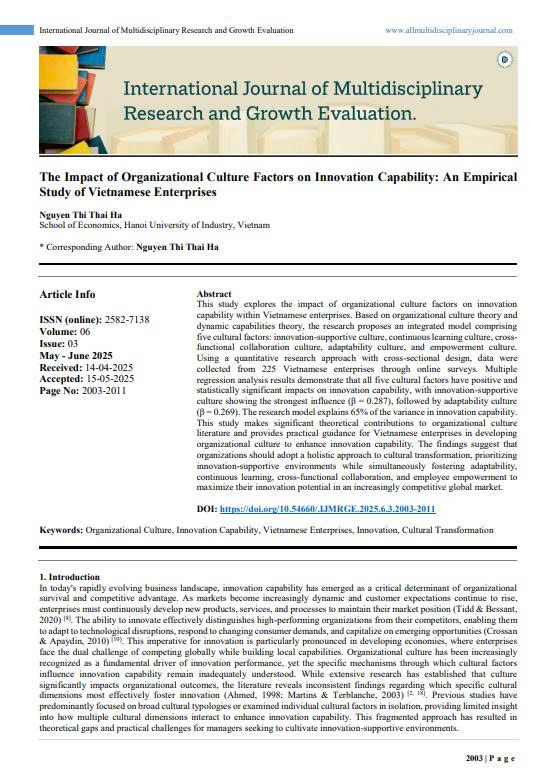
The Impact of Organizational Culture Factors on Innovation Capability: An Empirical Study of Vietnamese Enterprises
Tác giả: Nguyễn Thị Thái Hà. Tạp chí/ nơi công bố International Journal of Multidisciplinary Research and Growth Evaluation. Thời gian công bố 6/2025
This study explores the impact of organizational culture factors on innovation capability within Vietnamese enterprises. Based on organizational culture theory and dynamic capabilities theory, the research proposes an integrated model comprising five cultural factors: innovation-supportive culture, continuous learning culture, cross-functional collaboration culture, adaptability culture, and empowerment culture. Using a quantitative research approach with cross-sectional design, data were collected from 225 Vietnamese enterprises through online surveys. Multiple regression analysis results demonstrate that all five cultural factors have positive and statistically significant impacts on innovation capability, with innovation-supportive culture showing the strongest influence (β = 0.287), followed by adaptability culture (β = 0.269). The research model explains 65% of the variance in innovation capability. This study makes significant theoretical contributions to organizational culture literature and provides practical guidance for Vietnamese enterprises in developing organizational culture to enhance innovation capability. The findings suggest that organizations should adopt a holistic approach to cultural transformation, prioritizing innovation-supportive environments while simultaneously fostering adaptability, continuous learning, cross-functional collaboration, and employee empowerment to maximize their innovation potential in an increasingly competitive global market.
Nghiên cứu này khám phá tác động của các yếu tố văn hóa tổ chức đến năng lực đổi mới sáng tạo trong các doanh nghiệp Việt Nam. Dựa trên lý thuyết văn hóa tổ chức và lý thuyết năng lực động, nghiên cứu đề xuất một mô hình tích hợp bao gồm năm yếu tố văn hóa: văn hóa hỗ trợ đổi mới sáng tạo, văn hóa học tập liên tục, văn hóa hợp tác liên chức năng, văn hóa thích ứng và văn hóa trao quyền. Sử dụng phương pháp nghiên cứu định lượng với thiết kế cắt ngang, dữ liệu được thu thập từ 225 doanh nghiệp Việt Nam thông qua khảo sát trực tuyến. Kết quả phân tích hồi quy bội cho thấy cả năm yếu tố văn hóa đều có tác động tích cực và có ý nghĩa thống kê đến năng lực đổi mới sáng tạo, trong đó văn hóa hỗ trợ đổi mới sáng tạo thể hiện tác động mạnh nhất (β = 0,287), tiếp theo là văn hóa thích ứng (β = 0,269). Mô hình nghiên cứu giải thích được 65% phương sai của năng lực đổi mới sáng tạo. Nghiên cứu này đóng góp đáng kể vào lý thuyết văn hóa tổ chức và cung cấp hướng dẫn thực tiễn cho các doanh nghiệp Việt Nam trong việc phát triển văn hóa tổ chức để nâng cao năng lực đổi mới sáng tạo. Các phát hiện cho thấy các tổ chức nên áp dụng một cách tiếp cận toàn diện đối với chuyển đổi văn hóa, ưu tiên các môi trường hỗ trợ đổi mới sáng tạo đồng thời thúc đẩy khả năng thích ứng, học tập liên tục, hợp tác liên chức năng và trao quyền cho nhân viên để tối đa hóa tiềm năng đổi mới sáng tạo của họ trong một thị trường toàn cầu ngày càng cạnh tranh.
Thứ Tư, 14:38 03/12/2025
🚨 Đại học Công nghiệp Hà Nội triển khai quản lý Đồ án, Khóa luận tốt nghiệp trên Hệ thống Đại học điện tử từ 06/4/2026
Thứ Hai, 17:06 06/04/202604 Chương trình đào tạo bằng Tiếng Anh tại Trường Kinh tế - Đại học Công nghiệp Hà Nội
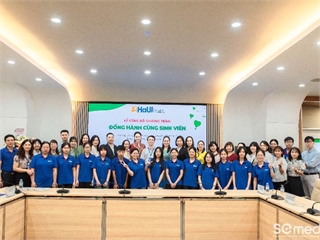
Thứ Sáu, 08:19 27/02/2026Trường Kinh tế - Trường Đại học Công nghiệp Hà Nội long trọng tổ chức Lễ ra mắt và công bố “Chương trình Đồng hành cùng sinh viên”
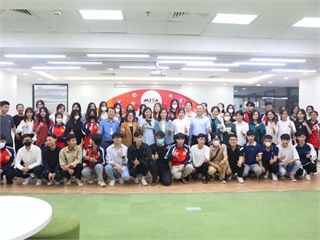
Thứ Ba, 14:55 10/06/2025Chuyến tham quan thực tế doanh nghiệp đầu tiên của ngành Phân tích dữ liệu kinh doanh Khóa 17 tại Công ty cổ phần Misa
Thứ Tư, 15:32 08/11/2023Chuyến trải nghiệm thực tế 4 ngày 3 đêm của 4 sinh viên tiêu biểu khoa Kế toán – Kiểm toán trường ĐHCNHN
Thứ Hai, 22:26 05/06/2023
The Factors Affect Financial Performance of Companies Listed On Ho Chi Minh Stock Exchange in Vietnam
Thứ Hai, 13:31 12/01/2026
Digital transformation in accounting of Vietnamese small andmediumenterprises
Thứ Sáu, 11:32 09/01/2026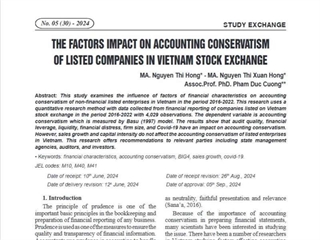
THE FACTORS IMPACT ON ACCOUNTING CONSERVATISM OF LISTED COMPANIES IN VIETNAM STOCK EXCHANGE
Thứ Năm, 13:34 08/01/2026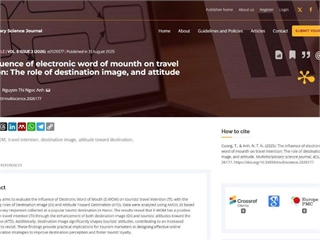
The influence of electronic word of mounth on travel intention: The role of destination image, and attitude
Thứ Tư, 11:29 07/01/2026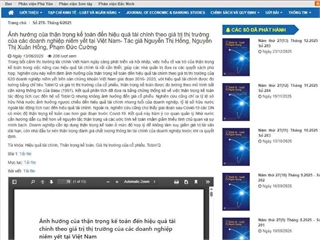
Ảnh hưởng của thận trọng kế toán đến hiệu quả tài chính theo giá trị thị trường của các doanh nghiệp niêm yết tại Việt Nam
Thứ Ba, 13:47 06/01/2026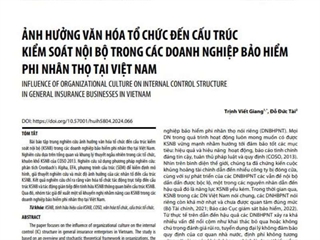
Ảnh hưởng văn hóa tổ chức đến cấu trúc kiểm soát nội bộ trong các doanh nghiệp bảo hiểm phi nhân thọ tại việt nam
Thứ Hai, 10:12 01/12/2025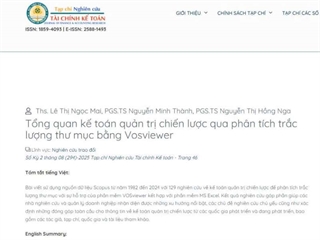
Tổng quan kế toán quản trị chiến lược qua phân tích trắc lượng thư mục bằng VOSVIEWER
Thứ Sáu, 10:09 28/11/2025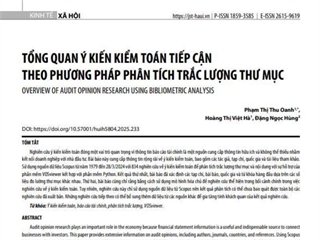
Tổng quan ý kiến kiểm toán tiếp cận theo phương pháp phân tích trắc lượng thư mục
Thứ Tư, 10:05 26/11/2025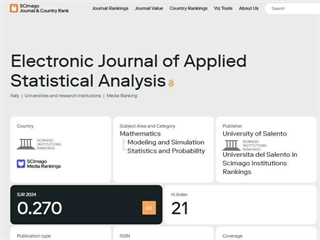
Forecasting audit opinions on financial statements: statistical algorithm or machine learning?
Thứ Hai, 09:34 24/11/2025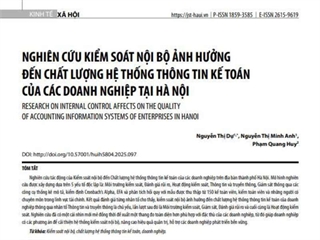
Nghiên cứu kiểm soát nội bộ ảnh hưởng đến chất lượng thông tin kế toán của các doanh nghiệp tại Hà Nội
Thứ Sáu, 09:09 21/11/2025Copyright © 2024 Trường Kinh tế || School of Economics