Forecasting audit opinions on financial statements: statistical algorithm or machine learning?
Tác giả: Pham Thi Thu Oanh, Dang Ngoc Hung, Vu Thi Thuy Van. Tạp chí/ nơi công bố Electronic Journal of Applied Statistical Analysis, Scopus Q4. Thời gian công bố 03/2024
This paper examines the applicability of different algorithms in forecasting the audit opinion on the financial statements of listed companies in Vietnam. We collected data from 492 enterprises listed on the stock market from 2016 to 2020 with 2460 observations, of which 154 observations have audit reports that are unqualified opinions, accounting for 6.26%. We use logistic regression algorithms, decision trees, and random forests. We consider two research models to assess the influence of factors, including groups of financial factors, factors belonging to the Board of Directors, and other factors on the audit report with an unqualified opinion. For model machine learning algorithms, the data is divided into two sets of Training and Testing with a ratio (of 80:20). The Testing dataset is used to evaluate the effectiveness of the predictive model. The results show that the audit opinion of the previous year has the most significant influence on the audit opinion, followed by profit after tax on equity, the ratio of receivables to revenue, and the business size. In particular, the ability to accurately predict the total non-acceptance audit opinion reaches 97% for the random forest algorithm. This study contributes to the current literature by examining which algorithm is appropriate for predicting the auditor’s opinion. Furthermore, this research adds empirical findings to the literature on audit reports to make the financial statement audit process more efficient
Nghiên cứu này xem xét ảnh hưởng của các nhân tố đến ý kiến kiểm toán không chấp nhận toàn phần, dữ liệu được thu thập từ 492 doanh nghiệp niêm yết thị trường chứng khoán Việt Nam giai đoạn 2016- 2020 với 2460 quan sát, trong đó có 154 quan sát với báo cáo kiểm toán với thuộc diện không chấp nhận toàn phần, chiếm tỷ lệ 6,26%. Nghiên cứu sử dụng các thuật toán hồi quy logistic, cây quyết định và rừng ngẫu nhiên, kết quả cho thấy ý kiến kiểm toán năm trước có ảnh hưởng và lớn nhất, kế tiếp là lợi nhuận sau thuế trên vốn chủ sở hữu, tỉ lệ nợ phải thu trên doanh thu, quy mô của doanh nghiệp. Với mô hình đã xây dựng, khả năng dự báo chính xác ý kiến kiểm không chấp nhận toàn phần với độ chính xác đạt đến 97% đối với thuận toán rừng ngẫu nhiên. Chúng tôi đề xuất một số khuyến nghị đối với người sử dụng báo cáo kiểm toán và đối với kiểm toán viên trong quá trình kiếm toán báo cáo tài chính đạt hiệu quả cao hơn.

Thứ Hai, 09:34 24/11/2025
🚨 Đại học Công nghiệp Hà Nội triển khai quản lý Đồ án, Khóa luận tốt nghiệp trên Hệ thống Đại học điện tử từ 06/4/2026
Thứ Hai, 17:06 06/04/202604 Chương trình đào tạo bằng Tiếng Anh tại Trường Kinh tế - Đại học Công nghiệp Hà Nội
Thứ Sáu, 08:19 27/02/2026Trường Kinh tế - Trường Đại học Công nghiệp Hà Nội long trọng tổ chức Lễ ra mắt và công bố “Chương trình Đồng hành cùng sinh viên”
Thứ Ba, 14:55 10/06/2025Chuyến tham quan thực tế doanh nghiệp đầu tiên của ngành Phân tích dữ liệu kinh doanh Khóa 17 tại Công ty cổ phần Misa
Thứ Tư, 15:32 08/11/2023Chuyến trải nghiệm thực tế 4 ngày 3 đêm của 4 sinh viên tiêu biểu khoa Kế toán – Kiểm toán trường ĐHCNHN
Thứ Hai, 22:26 05/06/2023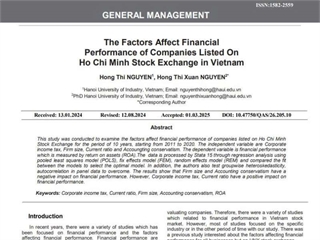
The Factors Affect Financial Performance of Companies Listed On Ho Chi Minh Stock Exchange in Vietnam
Thứ Hai, 13:31 12/01/2026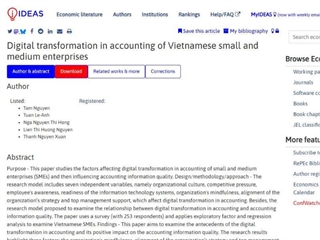
Digital transformation in accounting of Vietnamese small andmediumenterprises
Thứ Sáu, 11:32 09/01/2026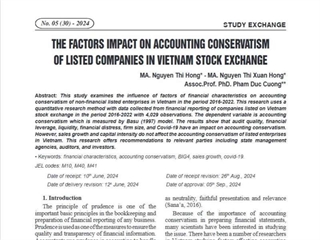
THE FACTORS IMPACT ON ACCOUNTING CONSERVATISM OF LISTED COMPANIES IN VIETNAM STOCK EXCHANGE
Thứ Năm, 13:34 08/01/2026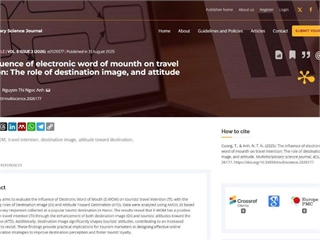
The influence of electronic word of mounth on travel intention: The role of destination image, and attitude
Thứ Tư, 11:29 07/01/2026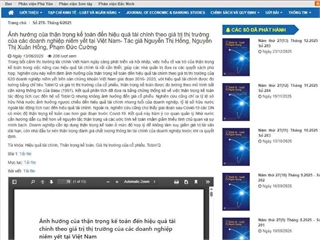
Ảnh hưởng của thận trọng kế toán đến hiệu quả tài chính theo giá trị thị trường của các doanh nghiệp niêm yết tại Việt Nam
Thứ Ba, 13:47 06/01/2026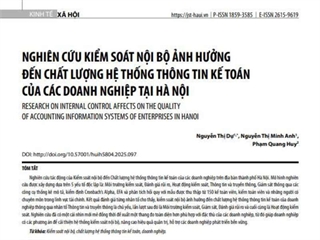
Nghiên cứu kiểm soát nội bộ ảnh hưởng đến chất lượng thông tin kế toán của các doanh nghiệp tại Hà Nội
Thứ Sáu, 09:09 21/11/2025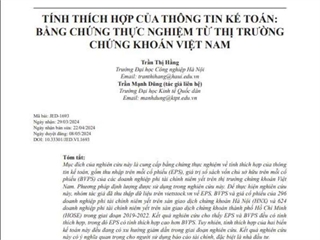
Tính thích hợp của thông tin kế toán: Bằng chứng thực nghiệm từ thị trường chứng khoán Việt Nam
Thứ Hai, 10:43 17/11/2025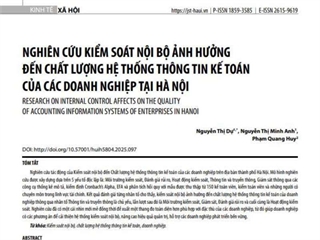
Nghiên cứu kiểm soát nội bộ ảnh hưởng đến chất lượng thông tin kế toán của các doanh nghiệp tại Hà Nội
Thứ Sáu, 10:36 14/11/2025Copyright © 2024 Trường Kinh tế || School of Economics